

The Invisible Guardian: How Custom Chemical Safety Cabinet Manufacturers Protect Workplaces
Generic chemical safety cabinets—the kind you pull straight off an industrial supply shelf—are often assumed to be “good enough.” They look solid, they carry warning labels, and they check a box on a compliance list. But in real workplaces, they frequently fail where it matters most: actual safety.
In one university chemistry lab, a mass-produced cabinet storing concentrated sulfuric acid. When a container leaked, the cabinet had no spill containment. The acid seeped down, damaged other containers, etched the concrete floor, and forced a two-hour lab shutdown. Thankfully, no one was injured—but the message was clear. That cabinet wasn’t a safety solution. It was just storage with a warning sticker. It lacked the details that prevent incidents from becoming disasters: proper spill control, ventilation for corrosive fumes, and separation for incompatible chemicals.
Chemical safety cabinets are essential in a variety of settings, including factories that store industrial solvents, university research labs that handle reagents, school science rooms that contain ethanol, and hospital labs that handle hazardous materials. Every location has its own daily procedures, chemical combinations, and layout restrictions. These realities cannot be accommodated by a one-size-fits-all cabinet, which frequently forces employees to circumvent the cabinet rather than benefit from it.
Manufacturers of custom chemical safety cabinets do more than just make steel enclosures. After researching human behavior, space constraints, and chemicals, they create cabinets that seamlessly integrate into everyday activities. These manufacturers are more than just suppliers to safety managers and facility directors; they are collaborators in risk mitigation, assisting in the conversion of obligatory rules into effective protection in the case of an emergency.
The Hidden Safety Risks of One-Size-Fits-All Cabinets
Generic cabinets tend to fail in the same few ways—and those failures show up right were safety matters most.
The first problem is space. A standard four-foot-wide safety cabinet might look fine on paper, but in a real manufacturing plant it often won’t fit near the production line. When that happens, workers are forced to walk long distances—sometimes more than 50 feet—while carrying heavy solvent containers. Over time, that leads to fatigue, shortcuts, and the very real temptation to leave chemicals out overnight “just this once.” Convenience starts overriding safety.
The second issue is how these cabinets handle different chemicals. Many generic models use a single open compartment, which means flammables, corrosives, oxidizers, and solvents all end up sharing the same space. On a label, that might still look like compliant storage, but in practice it’s risky. A small leak that should have been harmless can suddenly become a fire hazard or trigger a dangerous chemical reaction.
The third failure is design that ignores the people actually using the cabinet. In high school labs, tall cabinets often force students to climb on stools just to reach basic chemicals. Add missing or poorly designed childproof locks, and the risk increases even more—especially when younger students or visitors are around.
These aren’t minor design flaws. They’re gaps that quietly undermine safety every day, turning routine storage into an ongoing risk.
What Makes a Custom Chemical Safety Cabinet “Workplace Ready”?
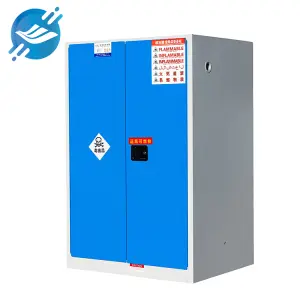
The foundation of custom chemical safety cabinets is the straightforward idea that safety shouldn’t compel you to alter your methods of operation. The top manufacturers begin by listening to your team’s routines, your area, and your chemicals before designing cabinets that provide protection without being obtrusive. The non-negotiable characteristics that distinguish them are as follows:
1. Material Matched to Your Chemicals:
Although steel appears tough, many chemicals don’t think the same. Strong corrosives like hydrochloric or sulfuric acid can gradually erode regular steel, sometimes in a matter of months. What begins as modest surface deterioration develops into leaks, weak places, and unsafe cabinets.
Manufacturers of safety cabinets can really help in this situation. They choose materials according to the specific chemicals being held rather than utilizing the same metal for everything. Diluted cleaning chemicals and mild corrosives are ideal for galvanized steel. 316-grade stainless steel provides significantly greater resistance to harsh acids like nitric acid in laboratory settings. Additionally, polypropylene cabinets are the safest option for chemicals like hydrofluoric acid that completely damage metal.
By matching the cabinet material to the chemistry inside, corrosion is largely eliminated. In many labs, custom stainless-steel cabinets remain rust-free for five years or more, while generic steel cabinets often need to be replaced after just one or two years. It’s not just about durability—it’s about preventing failures before they happen.
2. Smart Cabinet Designs That Maximize Safety in Limited Spaces:
Narrow lab corridors, low-ceilinged plant closets, uncomfortable nooks adjacent to workstations, and school rooms with little wall space are just a few examples of the various shapes that workplaces might take. Custom makers construct precise measurements: corner cabinets employ dead zones that generic units cannot reach; slim 24-inch-wide cabinets fit small lab aisles, and stackable units quadruple storage without increasing floor space. Custom cabinets fit the area like they were made for it (because they are), so a lab with a 3-foot space between fume hoods doesn’t need to reposition its equipment. Chemicals are kept close to their intended use thanks to this space-saving design, which reduces carrying and risk.
3. Compartmentalization for Chemical Compatibility;
It can be disastrous to store incompatible chemicals together since oxidizers and solvents might catch fire, and flammables and corrosives can react. Teams are forced to violate safety regulations to fit all their chemicals because generic cabinets only have one huge compartment. Dual or triple compartments with separate doors and spill trays are how custom manufacturers address this. OSHA requires flame arresters for flammable compartments, chemical-resistant linings for corrosive sections, and sealed doors for oxidizers to avoid vapor mixing. Compliance is no longer a chore because workers may safely access each type without juggling unsuitable materials.
4. Compliance That’s Built-In:
Chemical safety regulations (OSHA in the United States, WHMIS in Canada) are stringent, and generic cabinets frequently take short cuts to save money. Examples include missing flame arresters for flammables, spill trays that fill less than 10% of the cabinet, or ambiguous labeling. Compliance is incorporated into every aspect by custom manufacturers: OSHA-mandated self-closing doors and flame arresters, spill trays the size of the cabinet, and uniform “Corrosives” or “Flammables” labels. By offering certification documents for inspections, they transform regulatory checks from difficult processes into speedy signoffs. An OSHA inspection of a lab that used custom cabinets once took ten minutes; the examiners saw the labeled compartments, verified the certification, and moved on.
Benefits of Working with a Custom Chemical Safety Cabinet Manufacturer
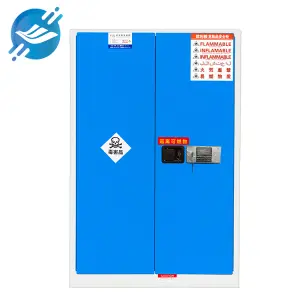
Creating a safer, more intelligent environment is the goal of working with a maker of custom chemical safety cabinets, not merely finding a location to store chemicals. Although generic cabinets can “hold” your chemicals in theory, they frequently don’t work well in practical applications. Conversely, custom cabinets are made to fit your area precisely, hold the precise chemicals you need, and facilitate safer and easier daily tasks.
They have well-thought-out features like built-in spill trays, ventilation systems that easily integrate with your lab setup, and separate sections for incompatible chemicals.
Because the cabinets are composed of materials that can truly manage your chemicals, there are fewer mishaps, quicker cleanups, and longer-lasting cabinets. Safety becomes realistic, dependable, and team-specific with a unique solution.
Conclusion: Great Safety Deserves Great Cabinets
Old generic cabinet pieces, such as corroded and damaged shelves, are kept by many safety teams as instructional aids. They demonstrate to new hires how easily generic designs fall apart: single compartments that encourage catastrophes, corroded metal, and missing spill pans. In contrast, custom cabinets become an essential element of everyday operations: labeled compartments facilitate quick inventory checks; rolling units move with production lines, and small units fit tight labs. They are frequently utilized since they match the way the business operates, so they don’t just sit in corners.
Additionally, every excellent custom cabinet has a maker who shares your concern for the safety of your crew. They create trust rather than just steel boxes. Have faith that the cabinet won’t spill, that it will adhere to regulations, and that your team will utilize it since it suits their needs. A safe workplace is built on that trust.
Post time: Dec-22-2025


