

The Backbone of Battery Safety: Why Custom Sheet Metal Battery Enclosure Manufacturers Matter
Jake, an engineer with a startup producing industrial solar batteries, grumbled as he looked at a prototype enclosure in a warehouse outside of Detroit. Although the generic sheet metal box they had purchased online appeared to be very solid, his team’s thermal test revealed that hot air had become trapped within, causing the battery temperature to spike. Even worse, there were spaces where moisture may sneak in due to the irregular seams. He told his crew, “We spent six months perfecting the battery chemistry, only to be undone by a box.” At that point, they contacted a producer of custom sheet metal battery enclosures. After four weeks, they produced a battery enclosure with precisely cut vents, tightly sealed welded seams, and a heat-dissipating design that matched the specifications of their battery.
Modern technology depends on batteries to run solar grids, electric cars, medical equipment, and industrial machines. However, the quality of a battery depends on the protective container. For these crucial housings, sheet metal is the preferred material due to its strength, heat resistance, and malleability. But are generic enclosures? They’re gambling. Custom sheet metal battery enclosure manufacturers are the unsung heroes here: They don’t just bend metal, they engineer solutions that address a battery’s unique needs, from thermal management to corrosion resistance to regulatory compliance. For engineers, product managers, and startup founders, they’re not just suppliers; they’re partnering in turning a battery design into a safe, market-ready product.
Why Customization Isn’t Optional? It’s Essential for Your Success
Since batteries are not universally compatible, neither can their enclosures. The requirements for a lithium-ion battery used to power portable tools on a construction site and a medical defibrillator are very different. A custom sheet metal manufacturer begins with your battery’s specifications, use case, and worst-case situations rather than a catalog. That’s the difference between an enclosure that functions “okay” and one that always functions.
Customization becomes even more accurate for industrial clients. In order to precisely match the size of a delivery van’s cargo space, a manufacturer collaborating with an electric vehicle (EV) fleet builder may design enclosures with integrated mounting brackets. Or for a data center’s backup battery system, they’ll design enclosures with perforated panels for airflow and cable management ports to keep wiring orderly. According to Jake, “generic enclosures force you to compromise the design of your battery.” “Custom ones enable optimal battery performance.”
The Engineering Craft: What Makes a Great Sheet Metal Enclosure
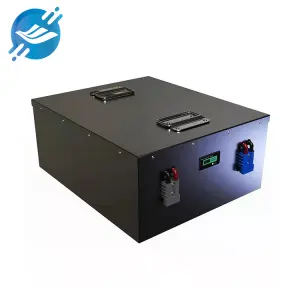
Although sheet metal may appear straightforward, creating a battery enclosure that is secure, long-lasting, and effective calls for a combination of precision production, material knowledge, and in-depth understanding of battery behavior. The top bespoke makers are experts at the intricacies that make or ruin an enclosure, not merely bending metal:
1: Material Selection: Choosing the Right Metal for the Job:
Sheet metal is not all made equal. Stainless steel provides unparalleled durability for industrial settings; aluminum is perfect for weight-sensitive applications (such drones or portable medical gadgets), and galvanized steel is excellent for outdoor use (corrosion resistance). There won’t be any guesswork—a manufacturer will match the material to your use case. According to a customer in the boating sector, “We build batteries for marine vessels.” 316 stainless steel, which is resistant to corrosion in seawater, was suggested by our manufacturer. The 1018 steel used in generic enclosures would rust in six months. Our last five years or longer.
2. Thermal Management: Keeping Batteries Cool or Warm:
Batteries are erratic; if they are too hot, they will overheat; if they are too cold, they will lose their capacity. Thermal requirements are taken into consideration when custom manufacturers design enclosures: Perforated panels for ventilation, heat sinks welded to the exterior or even insulated liners for cold-weather applications. With their first generic enclosure, Jake’s solar battery team discovered this the hard way. “Our manufacturer added a fan mount for days with high temperatures, along with precision-cut vents that line up with the battery’s heat sources,” he explains. “Now, even in direct sunlight, our battery remains within two degrees of its ideal temperature.”
3. Precision Fabrication: Seams, Bends, and Tolerances That Matter:
The intricacies of a battery casing are what makes it strong. An uneven curve may put strain on the battery’s cells, and a 1/16-inch gap in a seam may allow moisture or dust to enter. Robotic welding, laser cutting, and CNC punching are used by excellent manufacturers to guarantee tolerances as small as ±0.005 inches. According to a client in the healthcare sector, “tolerance is non-negotiable—we build batteries for medical devices.” “Every access panel fits precisely thanks to our manufacturer’s laser cutting, and their robotic welding produces watertight seams. That is the difference between passing and failing FDA inspections.
B2B Manufacturing Partners: From First Prototype to Full-Scale Production
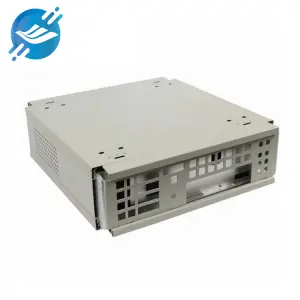
Custom sheet metal producers are more than just providers to business-to-business (B2B) clients, such as startups, industrial companies, automakers, or manufacturers of medical devices. They work with you to scale your product from a prototype to thousands of units without compromising consistency or quality.
1: Prototype Support: Turning Ideas into Testable Designs:
Startups frequently design batteries but have no idea how to enclose them. Prototype services are provided by excellent manufacturers, who will collaborate with your engineering team to improve the batter enclosure design, construct a small number of samples, and test them alongside your batteries. Jake states, “We had a rough sketch of our enclosure.” Our manufacturer constructed three prototypes, refined it using CAD software, and assisted us with weather and heat testing. They discovered a defect in our lid design that would have resulted in leaks—something we would not have discovered on our own.
2: Mass Production: Consistency Across Thousands of Units:
It takes accuracy to scale a prototype to mass production after it has been authorized. For customers who want uniformity across sites, such as solar installers or EV fleet builders, custom manufacturers employ automated production lines to guarantee that every enclosure is the same. Maria states, “We require 500 enclosures per month for our solar batteries.” The 500th enclosure is identical to the first thanks to our manufacturer’s automated laser cutting and welding. They are all flawless, thus we don’t need to separate them into “good” and “bad” units.
3. Flexibility: Adapting to Design Changes and Tight Deadlines:
Whether it’s a reduced cell size, a new thermal requirement, or a last-minute regulatory update, battery designs change throughout time. The top manufacturers are quick to adjust. Two months prior to launch, a client in the automobile sector needed to adjust the battery’s dimensions. “Our manufacturer changed their production line, revised the CAD design in 48 hours, and still delivered on time,” they claim. “We would have had to wait three months with generic providers. They prevented our launch from failing.
Conclusion:
“We nearly forgot the box containing the battery because we spent so much time on the battery itself.” “But our battery is safe, dependable, and trusted by our customers because of that box.”
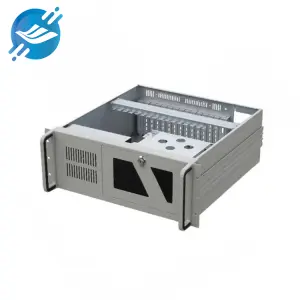
Batteries power the future, yet because of unique sheet metal enclosures, it is safe. They are the cornerstone of any reliable battery system, the unseen engineers who turn metal into defense, and the partners who ensure that your battery not only works but also lasts for many years. In a world where battery performance and safety are non-negotiable, a smart bespoke manufacturer is more than just a supplier. They are the reasons your battery is successful.
Post time: Dec-16-2025


