

Ventilated Industrial Equipment Cabinet: A Practical Enclosure for Industrial Equipment Protection
Industrial equipment often requires more than a simple metal box. Equipment installed in factories, workshops, control rooms, utility areas, and commercial facilities needs a protective enclosure that can organize internal space, reduce exposure to dust and accidental contact, and support proper heat management. A Ventilated Industrial Equipment Cabinet combines a rigid sheet-metal structure with dedicated ventilation openings, making it suitable for applications where equipment protection and airflow need to be considered together.
Designed with a durable outer enclosure, front access door, ventilation panels, protective top cover, and stable base structure, the Ventilated Industrial Equipment Cabinet can be customized according to the dimensions, installation requirements, equipment layout, and operating environment of a project. As a manufacturer specializing in customized sheet-metal fabrication, we can develop cabinet structures according to drawings, samples, dimensions, materials, surface finishes, and functional requirements.
Why Ventilation Matters in Industrial Equipment Enclosures
Many types of industrial and electrical equipment generate heat during operation. Power supplies, control equipment, networking hardware, converters, drives, batteries, and other components may produce continuous heat depending on their working conditions. If an enclosure does not provide an appropriate method for heat dissipation, excessive heat can affect operating stability and shorten the service life of internal equipment.
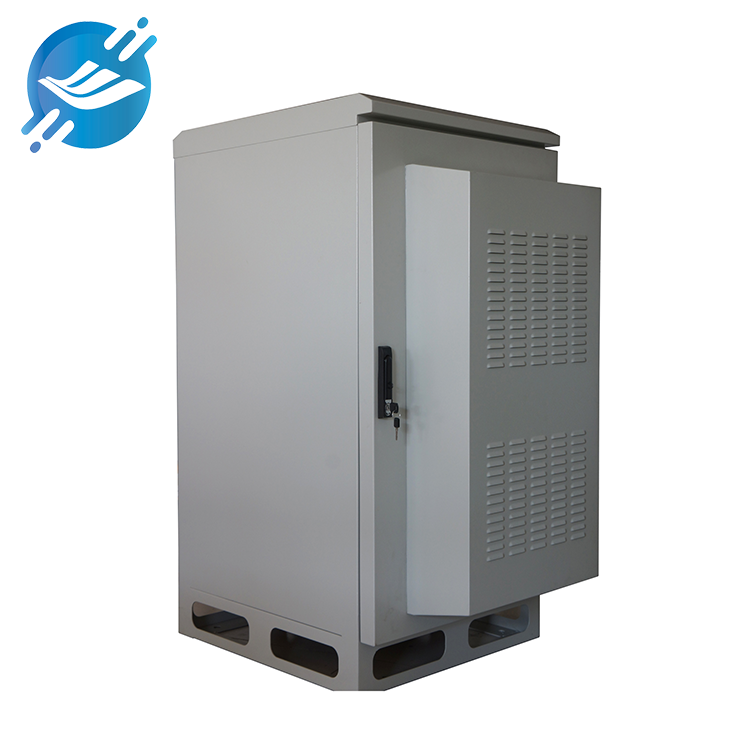
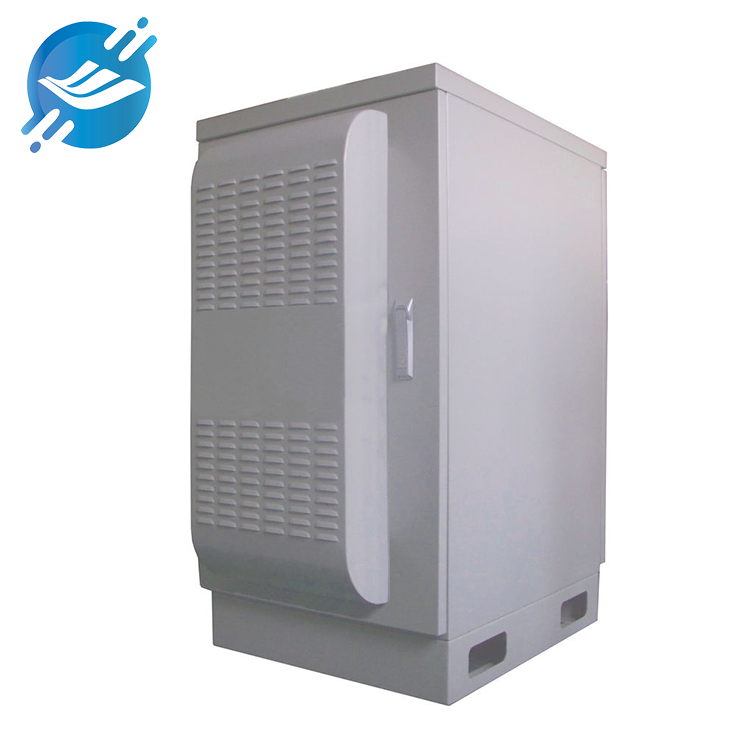
The Ventilated Industrial Equipment Cabinet addresses this requirement through strategically positioned ventilation openings on the side access panel. The perforated sections allow air to move through the enclosure while maintaining a physical barrier around the equipment. The ventilation design can be adjusted according to the application, including the opening pattern, ventilation area, position, and panel configuration.
Ventilation should always be designed according to the actual equipment and environmental conditions. For applications with higher thermal loads, additional cooling solutions may be incorporated into the enclosure design. Depending on the project, customers can discuss fan openings, filter areas, cable-entry positions, mounting structures, and other requirements with the manufacturer before production.
This makes the Ventilated Industrial Equipment Cabinet more than a standard storage cabinet. It is an engineered outer enclosure intended to create a controlled and organized installation space for industrial equipment.
A Sheet Metal Structure Designed for Industrial Applications
The main body of the Ventilated Industrial Equipment Cabinet is constructed around a rigid sheet-metal enclosure. Sheet metal is widely used for industrial housings because it can be processed into panels, doors, covers, brackets, mounting plates, and structural components while maintaining a relatively compact profile.
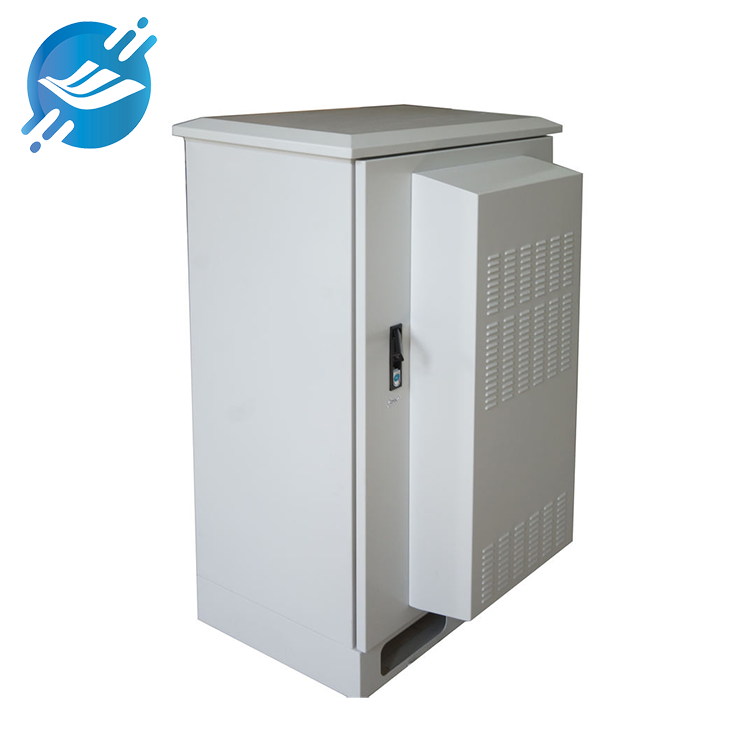
The cabinet shown features a clean rectangular body with a large front access door. The door provides convenient access to the equipment area for installation, inspection, maintenance, and replacement. The surrounding enclosure helps protect internal equipment from accidental impact and everyday environmental exposure.
The sheet metal enclosure can be manufactured using materials such as cold rolled steel, stainless steel, or aluminum alloy, depending on the project requirements. Material selection can be based on mechanical strength, corrosion resistance, weight requirements, appearance, and installation environment.
For indoor industrial applications, cold rolled steel can provide a practical combination of strength, fabrication efficiency, and cost control. Stainless steel may be considered for environments requiring stronger corrosion resistance, while aluminum can be selected where reduced weight is an important consideration.
The material thickness can also be customized. Different areas of the enclosure may use different thicknesses depending on structural requirements, door size, mounting requirements, and expected operating conditions.
Front Access for Easier Installation and Maintenance
Maintenance accessibility is an important consideration when designing industrial equipment housings. Equipment should not only be protected during normal operation but should also remain accessible when technicians need to inspect or service it.
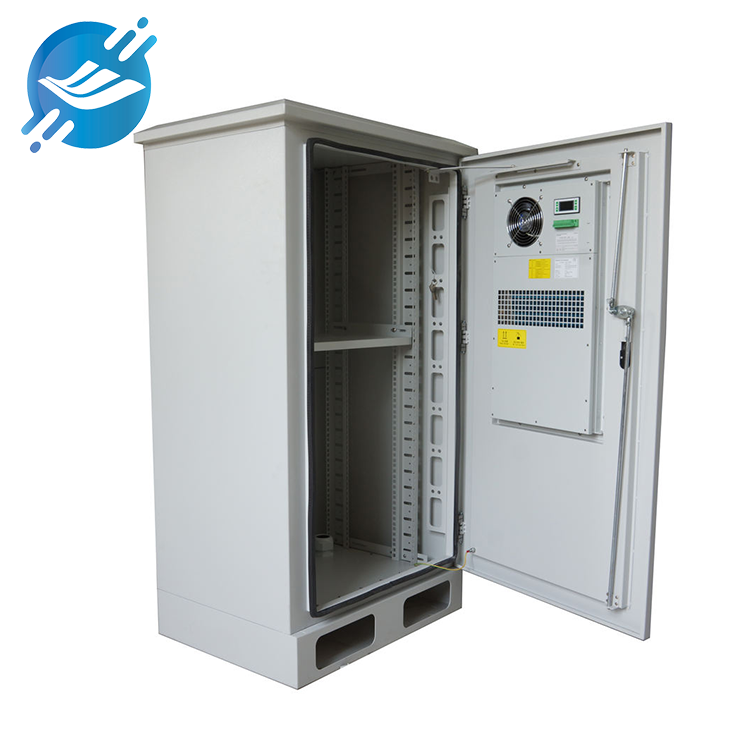
The Ventilated Industrial Equipment Cabinet uses a large front access panel that provides a practical opening into the internal area. This design can simplify equipment installation and allow technicians to reach internal components without removing the complete enclosure from its installation position.
The front door can be configured with different locking options depending on security and operational requirements. A lockable door helps prevent unauthorized access while maintaining convenient access for authorized personnel.
Door hinges, handles, locks, reinforcement structures, and opening angles can all be customized during the fabrication process. For larger doors, reinforcement may be incorporated to improve rigidity and reduce deformation during repeated opening and closing.
For applications involving frequent maintenance, the door structure can also be designed around the required working clearance. This allows the enclosure to accommodate equipment that needs regular inspection or adjustment.
Ventilation Panels for Airflow Management
One of the defining characteristics of the Ventilated Industrial Equipment Cabinet is its ventilated side panel. The panel contains rows of evenly distributed ventilation openings, creating an airflow area while retaining the structural function of the enclosure wall.
The ventilation openings can be manufactured through precision punching or other sheet-metal processing methods. Their dimensions, spacing, shape, and total ventilation area can be adjusted according to the customer’s design requirements.
For example, ventilation openings may be concentrated around areas where heat accumulation is expected. Alternatively, ventilation may be distributed across multiple enclosure panels to encourage more balanced airflow.
For applications where dust protection is important, ventilation areas can potentially be combined with suitable filters or other airflow-management components. If fans or cooling equipment are required, the enclosure can also be prepared with mounting cutouts and installation interfaces.
These design options make the Ventilated Industrial Equipment Cabinet adaptable to different equipment configurations rather than limiting customers to a fixed standard structure.
Structural Protection for Valuable Equipment
Industrial equipment can represent a significant investment, and its enclosure plays an important role in providing physical protection. A properly fabricated metal cabinet can create separation between sensitive equipment and the surrounding working environment.
The Ventilated Industrial Equipment Cabinet provides a rigid outer structure that can help protect internal equipment against accidental contact, minor external impacts, and general workplace exposure. The enclosed design also helps organize the installation area and create a cleaner overall appearance.
The cabinet can be designed with internal mounting plates, rails, brackets, shelves, partitions, or other structural elements when required. These components can be positioned according to the equipment layout rather than relying on a generic internal configuration.
This is particularly useful when the enclosure is being developed for a specific machine, control system, electrical assembly, communication installation, or industrial automation application.
The custom equipment housing approach allows the external cabinet to be designed around the actual equipment dimensions. Instead of forcing the equipment into a standard enclosure, the enclosure itself can be developed around the project.
Custom Sheet Metal Fabrication for Different Requirements
Different industrial applications have different enclosure requirements. A cabinet installed inside a clean equipment room may have very different requirements from one installed in a workshop, warehouse, utility area, or industrial production environment.
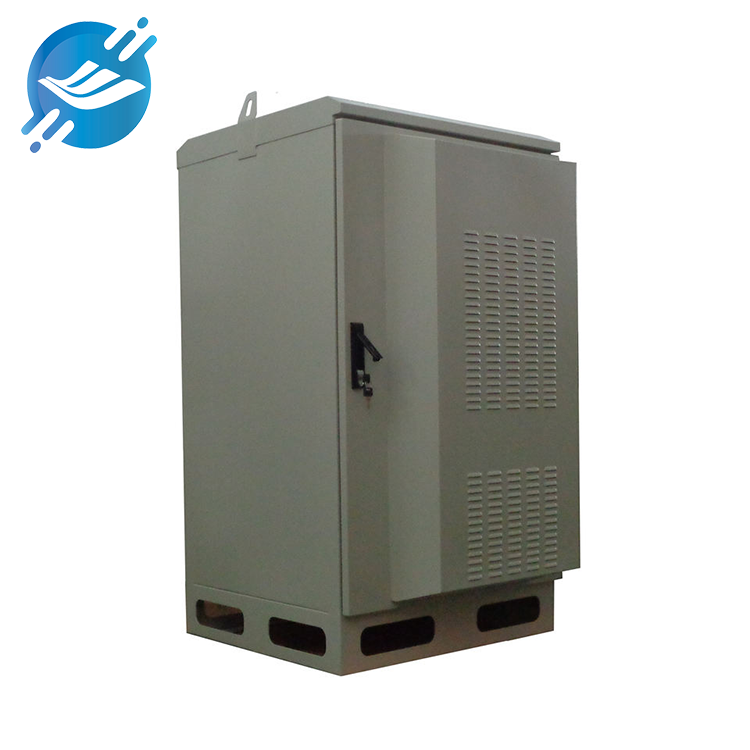
With custom sheet metal fabrication, customers can specify important cabinet parameters before production. These may include overall dimensions, material, material thickness, door configuration, ventilation openings, mounting holes, cable-entry openings, locking method, surface finish, color, internal mounting structure, and installation method.
The external dimensions can be developed from customer drawings or equipment dimensions. This allows the cabinet to maximize available installation space while maintaining sufficient clearance around the equipment.
Cable management is another important design consideration. Cable-entry holes or cutouts can be positioned on the top, bottom, rear, or side panels depending on the installation environment. Their size and location can be customized to match the cable routing plan.
Mounting structures can also be incorporated into the enclosure during fabrication. This can reduce the need for additional modification at the installation site and help create a more organized finished assembly.
Surface Treatment and Appearance
Although the primary function of an industrial enclosure is protection, surface finish also affects long-term appearance and maintenance.
The Ventilated Industrial Equipment Cabinet shown uses a clean light-colored finish suitable for industrial and equipment-room environments. For customized projects, the surface finish can be selected according to the customer’s requirements.
Powder coating is commonly used for sheet-metal cabinets because it can provide a consistent finish and an additional protective layer over the metal surface. Customers can specify different colors according to their equipment, facility, safety requirements, or corporate visual standards.
Other surface-treatment options can be discussed according to the material and application. For stainless steel or aluminum cabinets, different finishing methods may be selected to achieve the required appearance and surface performance.
The surface treatment can also help create a professional appearance for equipment installed in customer-facing commercial or technical environments.
Applications of the Ventilated Industrial Equipment Cabinet
The Ventilated Industrial Equipment Cabinet can be adapted for a wide range of industrial and commercial applications where equipment requires an organized protective enclosure.
In industrial automation environments, the cabinet can be used as an outer housing for control equipment, electrical assemblies, automation systems, and related installations. Its internal structure can be customized around the equipment arrangement.
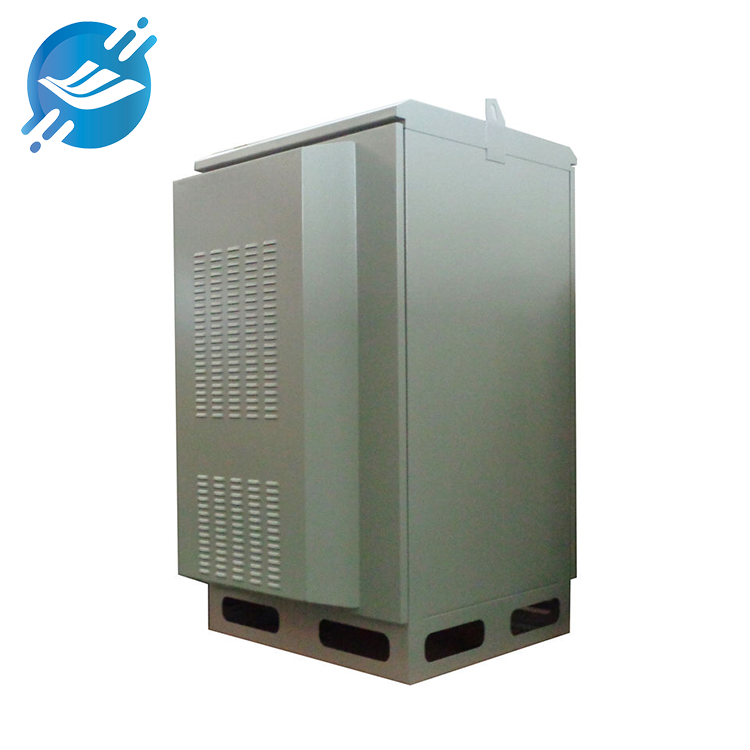
In communication and networking environments, the enclosure can provide a dedicated housing space for communication-related hardware. Ventilation openings can help support airflow around heat-generating equipment, while cable-entry points can be designed according to the network layout.
For electrical applications, the cabinet can be configured as an electrical equipment enclosure with suitable mounting panels, cable openings, locks, and ventilation structures. The exact configuration should be determined according to the equipment and applicable electrical safety requirements.
The cabinet can also be used in industrial workshops, utility facilities, equipment rooms, laboratories, warehouses, and other technical environments. Where the equipment is exposed to a relatively demanding operating environment, material and surface-treatment selection can be adjusted accordingly.
For specialized projects, the same basic cabinet concept can be modified into a wall-mounted, floor-standing, modular, or equipment-integrated enclosure.
How to Develop a Customized Industrial Cabinet
A customized Ventilated Industrial Equipment Cabinet normally begins with the customer’s equipment information or technical drawing. The manufacturer can review the required dimensions, installation method, access requirements, ventilation needs, and internal layout before developing the cabinet structure.
The first consideration is usually the overall cabinet size. The dimensions should provide enough space for the equipment while allowing appropriate clearance for installation, cable routing, ventilation, and maintenance.
The second consideration is material and thickness. These parameters influence the enclosure’s strength, weight, fabrication process, and cost. The appropriate selection depends on the actual project rather than simply choosing the thickest available material.
The third consideration is functional configuration. This includes the front door, lock, hinges, ventilation openings, cable-entry holes, mounting plates, internal brackets, shelves, and base structure.
The fourth consideration is surface treatment. Color, coating, finish, and other appearance requirements can be finalized according to the installation environment.
After the technical design is confirmed, the enclosure can move through cutting, punching, bending, welding, grinding, surface treatment, assembly, and quality inspection processes. This integrated fabrication process helps maintain consistency between the customer’s design and the finished product.
Important Design Considerations Before Production
When developing a Ventilated Industrial Equipment Cabinet, customers should consider more than the external dimensions. Internal equipment arrangement, heat generation, maintenance access, cable routing, installation location, and environmental conditions all influence the final enclosure design.
Ventilation is particularly important for equipment that generates heat. The manufacturer should understand the equipment’s operating conditions before determining the ventilation structure. If natural ventilation is insufficient, additional cooling provisions may need to be incorporated.
The cabinet’s door should also provide sufficient access to the equipment. If technicians need to remove or replace large components, the door opening and internal clearance should be considered during the design stage.
The base structure is another important element. A floor-standing cabinet may require reinforced feet, a raised base, adjustable leveling feet, caster wheels, or other installation solutions depending on how the cabinet will be positioned.
For transportation and installation, the cabinet structure can also be considered from a packaging and logistics perspective. Large or complex enclosures may be designed with removable components where appropriate to simplify handling and installation.
Why Choose a Custom Manufacturing Approach?
A standard cabinet may be sufficient for simple applications, but customized fabrication becomes more valuable when equipment dimensions, ventilation requirements, cable routing, or installation conditions are unique.
A custom industrial cabinet can be developed around the customer’s actual equipment instead of requiring the customer to adapt the equipment to a fixed cabinet. This can improve space utilization and create a more organized installation.
Customization can cover the external dimensions, panel layout, ventilation pattern, material, thickness, door structure, lock, mounting components, surface treatment, and other fabrication details.
For OEM and project-based applications, customized production can also support consistent cabinet designs across different equipment models or installation locations. Once the design is confirmed, the same structure can be reproduced for future production runs.
This approach is especially useful for equipment manufacturers, system integrators, industrial automation companies, electrical solution providers, and businesses developing specialized equipment.
A Flexible Solution for Industrial Equipment Protection
The Ventilated Industrial Equipment Cabinet shown in this product is based on a simple but highly adaptable concept: a rigid metal enclosure combined with accessible front entry and dedicated ventilation.
Its design can be developed for different equipment sizes and operating environments. The front access structure supports installation and maintenance, while the ventilated panel provides an airflow path without leaving the equipment completely exposed to the surrounding environment.
Through industrial enclosure manufacturing, customers can also customize the cabinet according to specific project requirements rather than selecting a one-size-fits-all product.
From sheet-metal material selection and panel thickness to ventilation openings, mounting structures, cable routing, locks, surface treatment, and dimensions, the enclosure can be developed as a project-specific solution.
For companies looking for a reliable outer housing for industrial equipment, a customized Ventilated Industrial Equipment Cabinet provides a practical foundation for building a clean, organized, and serviceable equipment installation.
Conclusion
A Ventilated Industrial Equipment Cabinet is designed to balance equipment protection, accessibility, structural strength, and airflow. Its sheet-metal construction creates a durable outer enclosure, while the ventilated panel provides a practical solution for applications where heat management needs to be considered.
The large front access door supports installation and maintenance, while the cabinet body can be customized with internal mounting structures, cable-entry openings, locks, ventilation areas, and different surface finishes.
For OEM projects and industrial applications, customization makes it possible to develop an enclosure around the actual equipment rather than adapting equipment to a fixed cabinet size. With professional sheet-metal fabrication, the Ventilated Industrial Equipment Cabinet can be produced according to customer drawings, samples, dimensions, materials, and functional requirements.
Whether used for industrial automation, electrical equipment, communication systems, control equipment, utility installations, or other technical applications, the Ventilated Industrial Equipment Cabinet can serve as a flexible outer protection solution designed around the specific needs of the project.
Post time: Sep-18-2026


