

Heavy Duty Mobile Tool Cart: A Practical Mobile Storage Solution for Professional Workshops
In a professional workshop, efficient tool organization can make a major difference in productivity. Technicians, mechanics, and maintenance teams often work with dozens or even hundreds of tools, spare parts, accessories, and consumable materials every day. When these items are stored far away from the working area or mixed together in unsuitable storage furniture, valuable time can be lost searching for the right tool. A well-designed mobile storage solution can help create a more organized and efficient workspace.
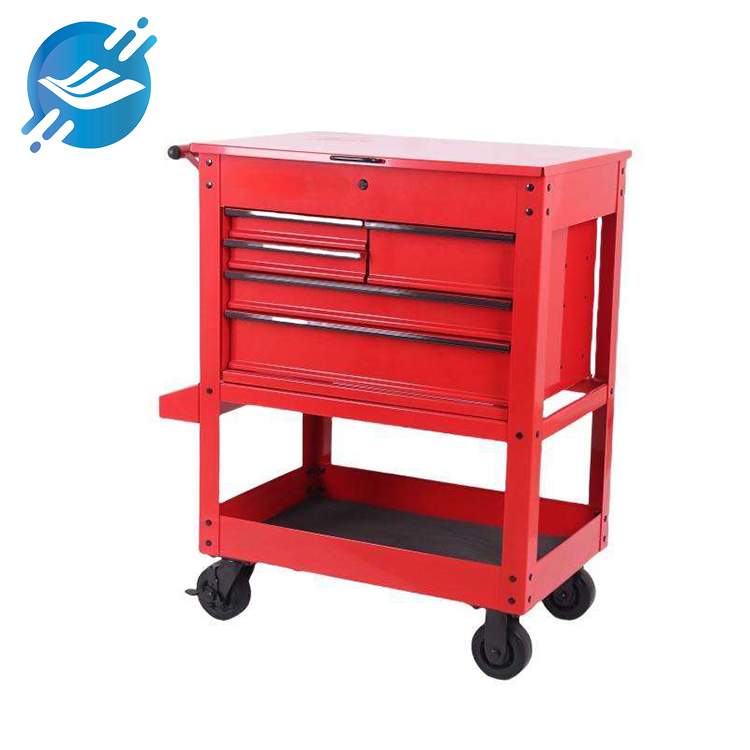
The Heavy Duty Mobile Tool Cart is designed around this practical requirement. Combining a durable steel frame, multiple drawers, an open lower shelf, a spacious top work surface, a push handle, and heavy-duty casters, this mobile tool cart provides both organized storage and convenient movement. It can be positioned close to the technician’s working area and moved whenever the workflow changes.
For workshops, garages, factories, repair centers, maintenance departments, and distributors looking for a flexible storage product, a mobile tool cart can provide an effective alternative to traditional fixed storage cabinets. With customizable dimensions, materials, colors, drawer configurations, and accessories, this type of product can also be developed for OEM and ODM projects.
Why Choose a Mobile Tool Cart for Workshop Organization?
Traditional workshop cabinets are useful when tools need to remain in a fixed location, but they can become less convenient when technicians regularly move between different workstations. A mobile cart addresses this limitation by placing storage and transportation functions into the same product.
The Heavy Duty Mobile Tool Cart is built with four casters, allowing users to move the entire unit without transferring tools from one storage location to another. A technician can organize commonly used tools inside the drawers, place larger equipment on the lower shelf, and use the top panel as a temporary work surface. The complete cart can then be pushed directly to a vehicle, machine, production line, or maintenance station.
This mobility can be especially valuable in automotive repair shops. Different vehicles may require different tools, and technicians may work across several service bays during a single shift. Instead of repeatedly walking to a stationary toolbox, the technician can move the cart to the vehicle being serviced.
The same principle applies to industrial maintenance. A maintenance worker may need to inspect machinery in different areas of a factory. Having a mobile storage unit means essential tools can travel with the worker, helping reduce unnecessary movement and keeping the workspace more organized.
Durable Steel Construction for Professional Applications
A workshop storage product needs to withstand frequent daily use. Tools can be heavy, drawers may be opened and closed repeatedly, and the cart may be moved across the floor while loaded. For this reason, steel is a practical material for manufacturing professional tool storage equipment.
The Heavy Duty Mobile Tool Cart can be manufactured using cold rolled steel sheet. The steel panels can be processed through cutting, bending, welding, forming, and surface treatment to create the main frame, drawer structure, side panels, worktop, lower shelf, and caster mounting system.
The thickness of the steel can be customized according to the intended application. A lightweight version can be developed for general workshops or home garages, while a heavier configuration can incorporate thicker steel and additional reinforcement for demanding industrial applications.
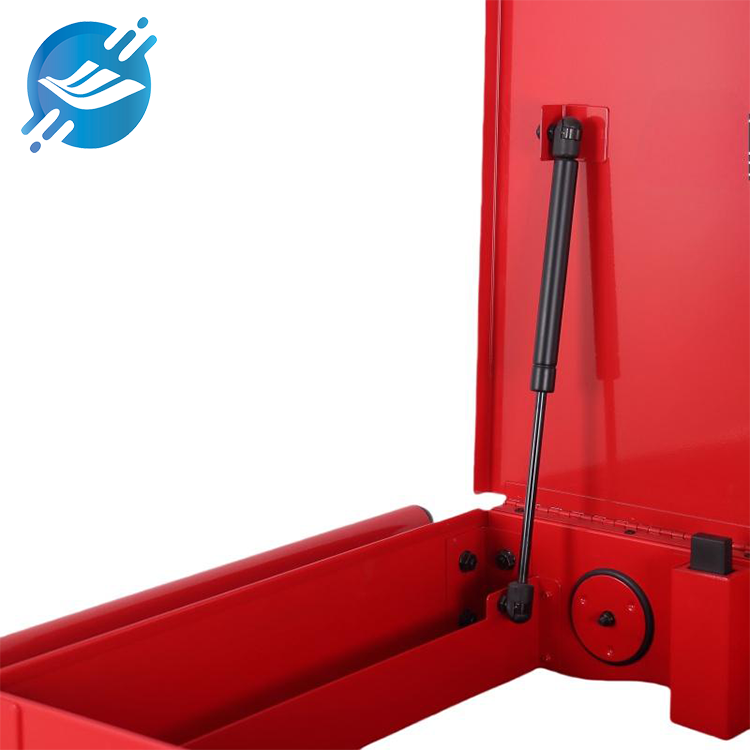
Structural reinforcement can also be added around high-stress areas. These may include the caster mounting points, drawer frame, handle connections, corners, and bottom structure. Folded edges and reinforcement ribs can improve rigidity without requiring excessive increases in material thickness.
This flexible manufacturing approach allows buyers to balance durability, product weight, manufacturing cost, and load requirements according to their specific market.
Multi-Drawer Storage for Better Tool Organization
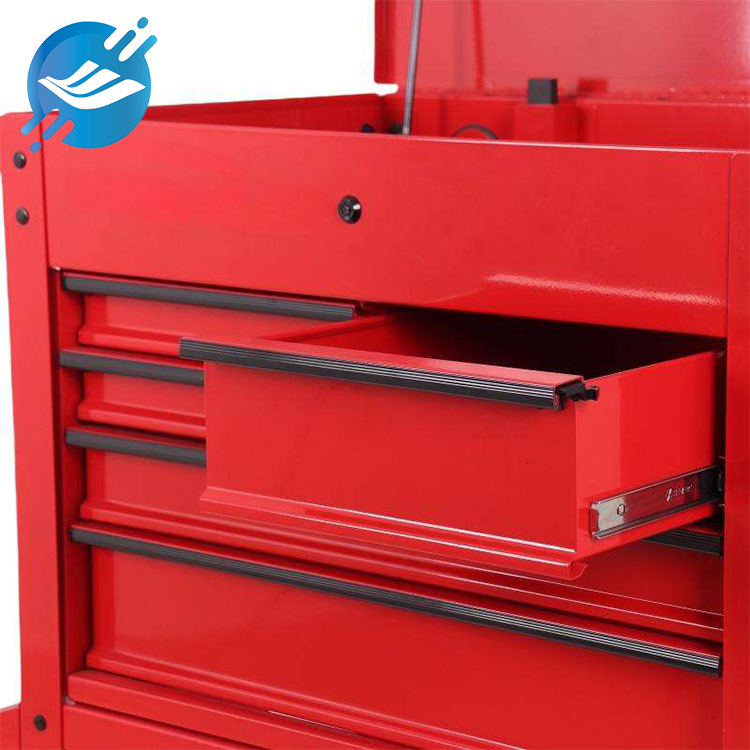
One of the most noticeable features of this mobile tool cart is its multi-drawer front configuration. Instead of storing all tools together in one large compartment, the drawers create separate storage zones for different categories of equipment.
For example, one drawer can be used for screwdrivers and pliers, another for wrenches, another for sockets, and another for small fasteners or maintenance accessories. This simple organization method can make frequently used tools easier to locate.
Drawer dimensions can also be customized. Shallow drawers are suitable for relatively flat tools and small accessories, while deeper drawers can provide additional vertical space for larger equipment. A mixed drawer configuration allows a single cabinet to accommodate tools of different sizes.
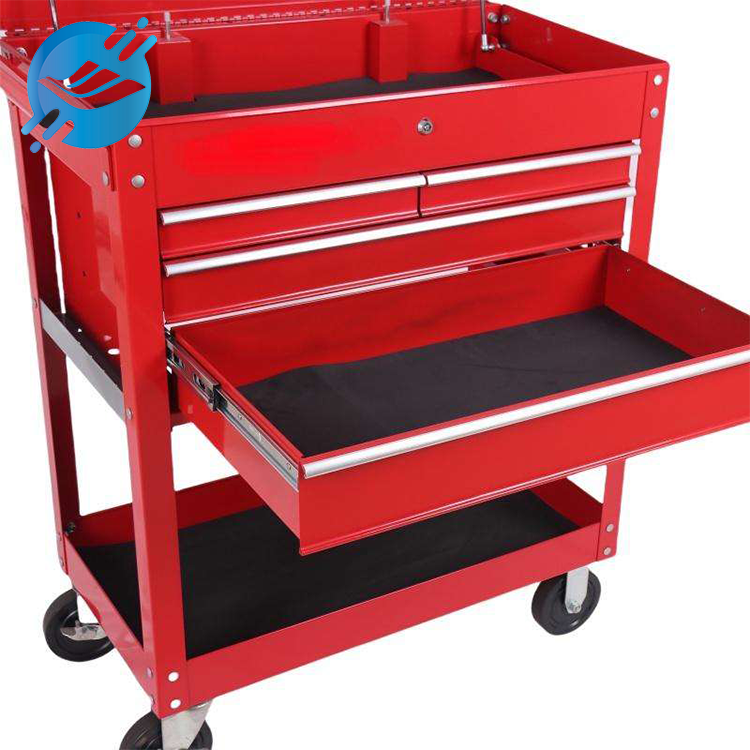
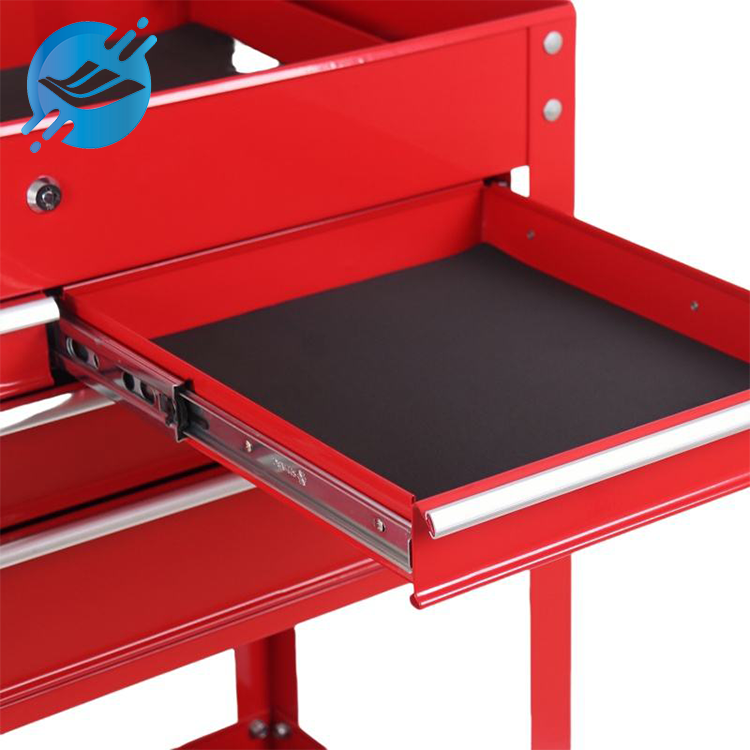
For professional applications, drawer slides are another important consideration. Heavy-duty telescopic slides can be selected when drawers need to support heavier loads or withstand frequent opening and closing. Different slide specifications can be considered according to the required drawer capacity and expected service frequency.
Optional drawer organizers can further improve internal storage. EVA liners, foam inserts, dividers, removable trays, and adjustable partitions can be incorporated into the design. These accessories can help prevent tools from moving around inside the drawers and allow users to create a storage layout based on their actual tool collection.
Open Lower Shelf for Larger Equipment
Not every workshop item belongs in a drawer. Large toolboxes, containers, machines, spare parts, bottles, and maintenance supplies often require more accessible and open storage.
The lower shelf of the mobile cart provides this additional capacity. Because the shelf remains open, users can quickly see what has been placed there and retrieve larger items without opening a drawer.
The lower shelf can also be designed with different heights depending on the customer’s requirements. A higher shelf position can create additional clearance underneath the drawers, while a lower configuration can provide space for larger equipment.
A protective rubber or EVA mat can be installed on the shelf to protect the metal surface and reduce the movement of stored items. Raised edges can also be considered when customers need additional protection against items sliding off during movement.
This combination of enclosed drawers and open shelf storage makes the cart more versatile than a storage system based entirely on drawers.
Spacious Worktop for a Mobile Workstation
A tool cart does not have to be used only for storage. Its top panel can become an important part of the technician’s workspace.
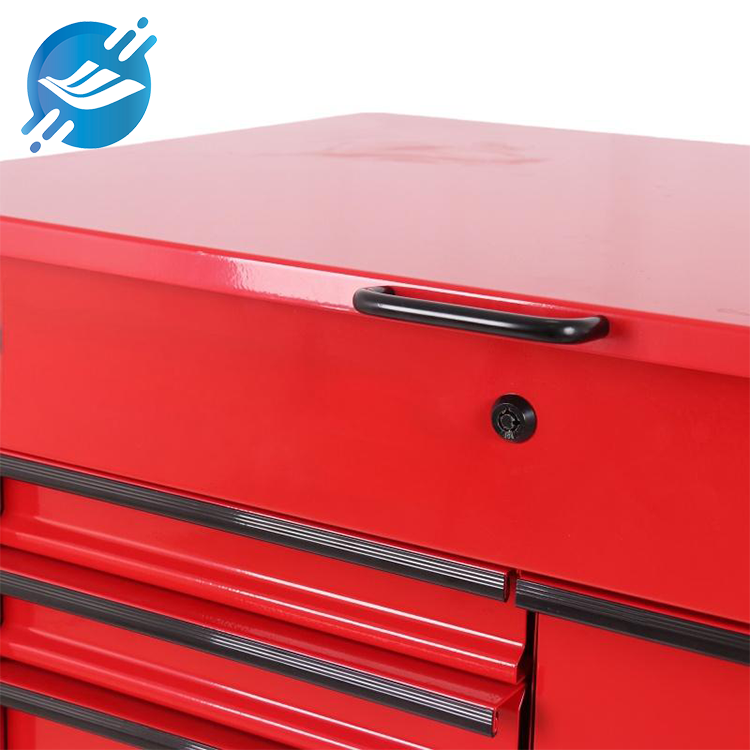
The flat steel top shown in this design provides a convenient surface for temporarily placing tools, components, measuring equipment, repair parts, or small machines. When the cart is positioned next to a vehicle or machine, the technician can keep frequently used items directly on the worktop.
The worktop can also be customized. Depending on the application, customers may request a protective rubber mat, EVA surface, stainless steel cover, anti-slip material, or reinforced steel work surface.
For heavy-duty applications, additional reinforcement can be incorporated beneath the top panel. This can improve the stability of the work surface when heavier equipment needs to be placed on it.
A properly designed worktop transforms the product from a simple mobile toolbox into a compact mobile workstation, providing storage and working functionality within the same footprint.
Easy Movement with Heavy-Duty Casters
Mobility is central to the design of a professional tool cart. The four caster system allows the cart to move between different working locations while carrying its stored tools.
The caster specification can be selected according to the expected load and floor conditions. Swivel casters can provide improved maneuverability, making it easier to turn the cart in narrow workshop spaces. Lockable casters can help keep the cart stationary when technicians are working with tools.
Different wheel materials and diameters can also be considered. Smooth workshop floors may require a different caster solution than rough industrial flooring. Larger wheels can provide additional clearance and improved movement over certain floor surfaces.
The connection between the casters and the cabinet is equally important. Reinforced mounting plates can be incorporated into the bottom frame to help distribute the load and strengthen the connection points.
For OEM customers, caster type, wheel diameter, braking mechanism, mounting structure, and overall configuration can all be customized.
Powder-Coated Surface for a Professional Appearance
The red finish shown on the Heavy Duty Mobile Tool Cart gives the product a recognizable industrial appearance suitable for automotive and workshop environments. The surface can be finished using powder coating, which provides a durable coating over the steel substrate.
Powder coating is also suitable for customization. Customers can select different colors according to their branding requirements, workshop design, or target market. Common alternatives include black, blue, gray, white, orange, and other customized colors.
For distributors and equipment brands, color customization can be combined with logo application. Company logos can be added using suitable methods such as metal badges, printing, labels, laser marking, or other branding techniques.
A consistent branded appearance can be particularly valuable for businesses purchasing tool carts in larger quantities. It allows the storage equipment to become part of the company’s overall workshop identity rather than appearing as generic equipment.
Applications Across Different Industries
The Heavy Duty Mobile Tool Cart can be adapted to many working environments because of its combination of mobility, organized storage, and open workspace.
In automotive repair shops, the cart can be used for hand tools, sockets, wrenches, screwdrivers, repair accessories, and spare parts. Technicians can move it between service bays according to daily work requirements.
In industrial factories, the cart can function as a mobile maintenance station. Maintenance teams can load commonly used tools into the drawers and transport replacement components or equipment on the lower shelf.
In machinery repair centers, the cart can be positioned beside the machine being serviced. The top work surface provides a convenient location for frequently used components and measuring instruments.
In schools and technical training centers, mobile tool storage can help instructors and students keep equipment organized and transport tools between training areas.
Home garages can also benefit from the same concept. A compact configuration can provide organized storage without occupying the space required by a large fixed cabinet.
Other potential applications include equipment service centers, fabrication workshops, electrical maintenance departments, warehouses, construction maintenance areas, and professional maker spaces.
Customization for OEM and ODM Projects
For B2B buyers, standard products are not always sufficient. Different industries and markets have different requirements for dimensions, drawer capacity, storage layout, colors, and accessories.
The Heavy Duty Mobile Tool Cart can be developed according to individual project specifications. The overall length, width, and height can be modified to suit different working environments. For example, a narrow cart can be developed for compact workshops, while a wider version can provide greater storage capacity for industrial users.
The number and size of drawers can also be changed. Customers may choose more shallow drawers for small tools or fewer deep drawers for larger equipment. Drawer slides can be selected according to the required load capacity.
Other customization options can include steel thickness, worktop material, caster size, caster braking system, handle design, lower shelf configuration, drawer organizers, protective mats, locks, labels, and logo placement.
Color customization is another important OEM option. Different RAL colors can be selected to match a customer’s existing product range or corporate branding.
Packaging can also be considered during product development. Depending on transportation requirements, the cart can be supplied fully assembled or developed with selected knock-down components to optimize packing volume and shipping efficiency.
How to Select the Right Mobile Tool Cart
Before purchasing a mobile tool cart, buyers should consider how the product will actually be used. The number and type of tools will determine the required drawer configuration, while the expected storage load will influence the steel thickness, drawer slide specification, shelf structure, and caster selection.
The available workspace should also be measured carefully. A cart that is too large can restrict movement in narrow areas, while a cart that is too small may not provide enough storage capacity.
The floor condition is another important factor. Smooth indoor floors can use standard industrial casters, while rough surfaces may require larger and more durable wheels.
Security requirements should also be considered. If expensive tools are stored inside the cart, a locking system can provide an additional level of protection. Central locking or individual locking solutions can be discussed depending on the design.
Finally, buyers should consider future expansion. A modular drawer configuration and customizable accessories can make it easier to adapt the storage system as the workshop’s tool collection grows.
Why Custom Manufacturing Matters
For distributors, importers, workshop equipment brands, and industrial buyers, custom manufacturing provides more flexibility than simply purchasing a standard catalog product.
A manufacturer can adjust the product according to target-market requirements, including dimensions, material thickness, storage configuration, appearance, packaging, and branding.
This is particularly useful when a buyer wants to develop a private-label workshop equipment series. A customized cart can share the same color system, logo placement, handle design, and visual language as other products in the range.
The manufacturing process can also be optimized around the expected order quantity and application. Different production methods, material specifications, and packaging solutions can be evaluated before mass production.
For businesses selling workshop storage equipment, this approach can create a product that is more closely aligned with customer expectations instead of relying on a one-size-fits-all design.
A Flexible Solution for Modern Workshops
The modern workshop is not simply a place where tools are stored. It is a working environment where organization, accessibility, mobility, and efficiency all contribute to productivity.
A well-designed mobile tool cart brings these functions together. Multiple drawers organize smaller tools, the lower shelf accommodates larger equipment, the top provides a convenient work surface, and the caster system allows the complete unit to move wherever it is needed.
The Heavy Duty Mobile Tool Cart shown in this design offers a practical foundation for these requirements. Its steel construction provides a durable base, while the multi-level storage system helps users create a more organized workstation. At the same time, the customizable structure makes it suitable for different industries, markets, and OEM projects.
For workshops looking to improve tool organization, manufacturers seeking private-label products, or distributors searching for flexible industrial storage equipment, a customizable mobile tool cart can be a practical addition to a professional product range.
With options for customized dimensions, drawer layouts, steel thickness, colors, casters, locks, accessories, branding, and packaging, the product can be developed around the specific requirements of each project. This combination of practical functionality and manufacturing flexibility makes a mobile steel tool cart a valuable solution for today’s automotive, industrial, maintenance, and workshop environments.
Post time: Sep-03-2026


