

Custom Ventilated Metal Enclosure: A Flexible Housing Solution for Industrial Equipment
Modern industrial and commercial equipment often requires more than functional internal components. The external housing plays an important role in protecting equipment, controlling airflow, organizing installation space, and creating a professional finished appearance. A properly engineered metal enclosure can also simplify installation, maintenance, and product customization.
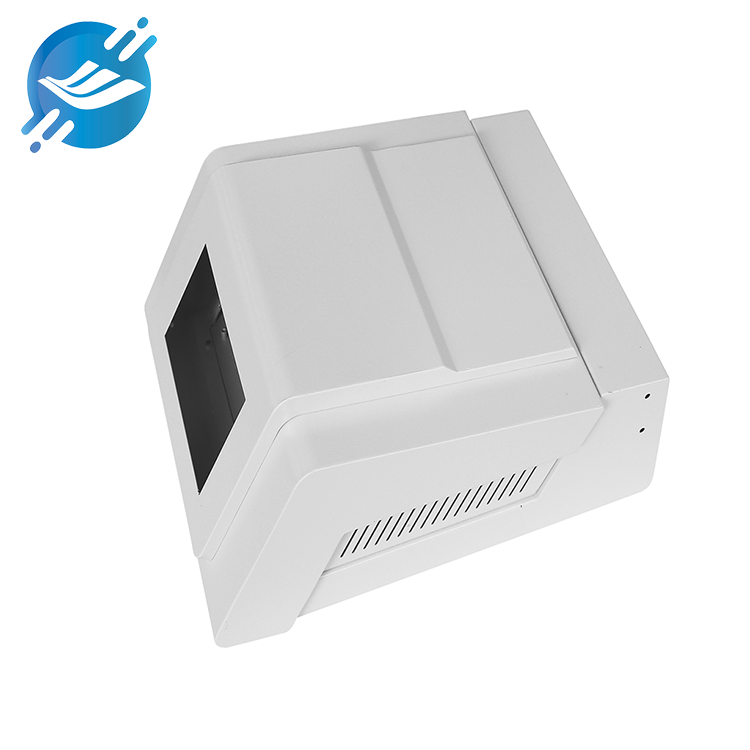
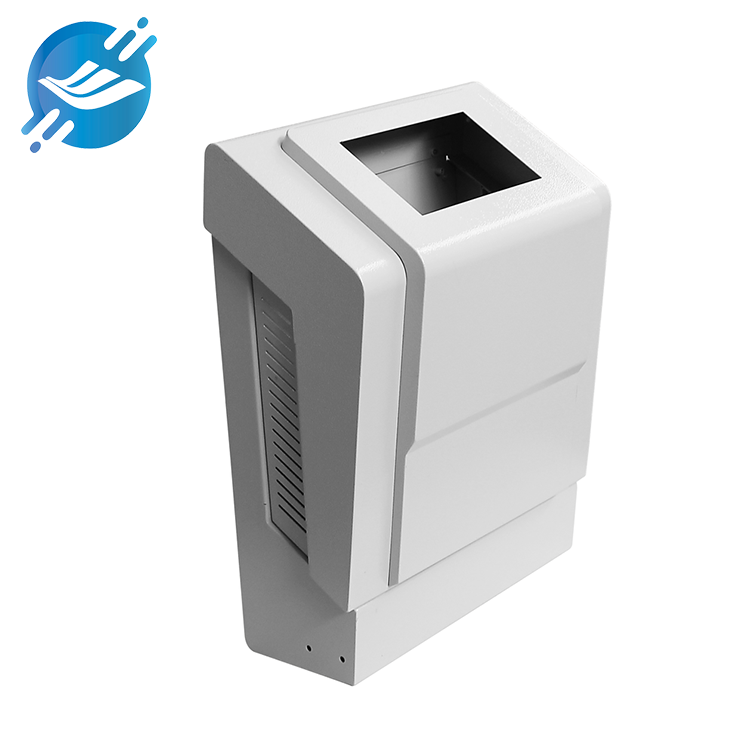
TheCustom Ventilated Metal Enclosureshown here is designed as a purpose-built outer housing for electronic, industrial, control, and commercial equipment. Its formed sheet metal structure combines protective coverage with integrated ventilation openings, customized mounting possibilities, and a clean powder-coated finish. Rather than being a standard off-the-shelf box, this type of enclosure can be developed around the dimensions and installation requirements of the customer’s equipment.
This article explains the structure, manufacturing process, ventilation design, customization possibilities, material options, applications, and important considerations when selecting a custom metal enclosure.
Why a Custom Metal Enclosure Matters
Every piece of equipment has different requirements. Some systems need additional ventilation because internal components generate heat. Others require specific cable openings, mounting holes, service panels, or shaped exterior surfaces. A standard enclosure may provide basic protection, but it may not match the actual configuration of the equipment inside.
A custom metal housing allows the external structure to be developed around the product itself. Dimensions, panel shape, mounting locations, ventilation openings, access areas, and surface treatment can all be considered during the engineering stage.
TheCustom Ventilated Metal Enclosureis particularly useful when both protection and airflow need to be considered. Its ventilation slots can provide passive air circulation while the formed sheet metal body creates a defined protective boundary around the equipment.
For equipment manufacturers, this approach can also create a more consistent product appearance. Instead of combining several standard housings with different dimensions or finishes, manufacturers can develop a dedicated enclosure that matches the appearance and technical requirements of a particular equipment series.
Sheet Metal Construction for Reliable Protection
Sheet metal is widely used for industrial equipment housings because it provides a practical balance between strength, manufacturability, and customization flexibility. Cold rolled steel can be cut and formed into detailed structures while providing a strong external shell.
TheCustom Ventilated Metal Enclosurecan be manufactured through processes such as laser cutting, CNC bending, welding, grinding, surface preparation, and final assembly. Each process contributes to the finished structure.
Laser cutting allows precise openings to be produced for ventilation, cables, connectors, switches, mounting points, and other interfaces. CNC bending then transforms flat metal sheets into three-dimensional panels with accurately positioned folds and edges. These formed sections can improve rigidity while creating the desired exterior appearance.
Where necessary, welding can connect structural sections permanently. Alternatively, screws, rivets, brackets, or other fastening methods can be used when a removable or serviceable structure is preferred.
Material thickness can also be selected according to the size and structural requirements of the enclosure. Larger housings or equipment with demanding mounting requirements may require additional reinforcement, while smaller housings can use a lighter structure when appropriate.
Ventilation Design for Heat Management
Heat management is one of the main reasons equipment manufacturers choose a ventilated enclosure. Electronic and industrial equipment can generate heat during operation, and insufficient airflow may affect the operating environment of the internal system.
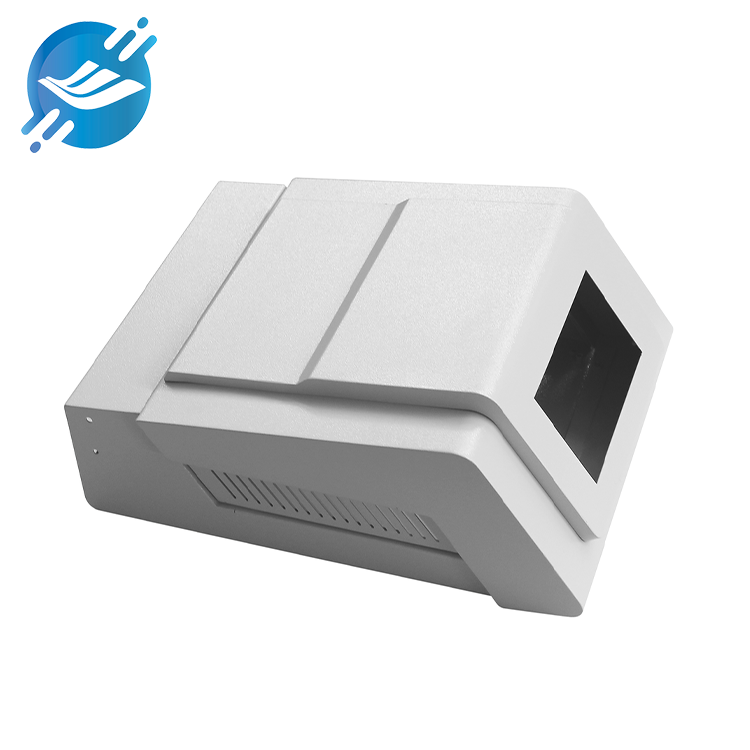
TheCustom Ventilated Metal Enclosureincorporates ventilation slots into the lower section of the housing. These openings allow air to circulate through designated areas of the enclosure and can support passive heat dissipation.
Ventilation openings do not have to follow a fixed pattern. During customization, their shape, quantity, spacing, length, width, and position can be adjusted according to the equipment’s requirements. This provides greater flexibility than purchasing a standard enclosure with predetermined ventilation.
The airflow design should be considered together with the internal equipment layout. If heat-generating components are positioned near one side of the enclosure, ventilation openings can potentially be arranged to support airflow around that area. Similarly, cable openings and mounting structures can be positioned without unnecessarily interfering with the intended ventilation path.
For applications requiring active cooling, the enclosure can also be designed with suitable fan openings and mounting provisions. The external housing itself remains the focus of the manufacturing project; internal electronic components or cooling equipment are not supplied as part of the outer metal case unless specifically included in a separate project specification.
Formed Structure and Professional Appearance
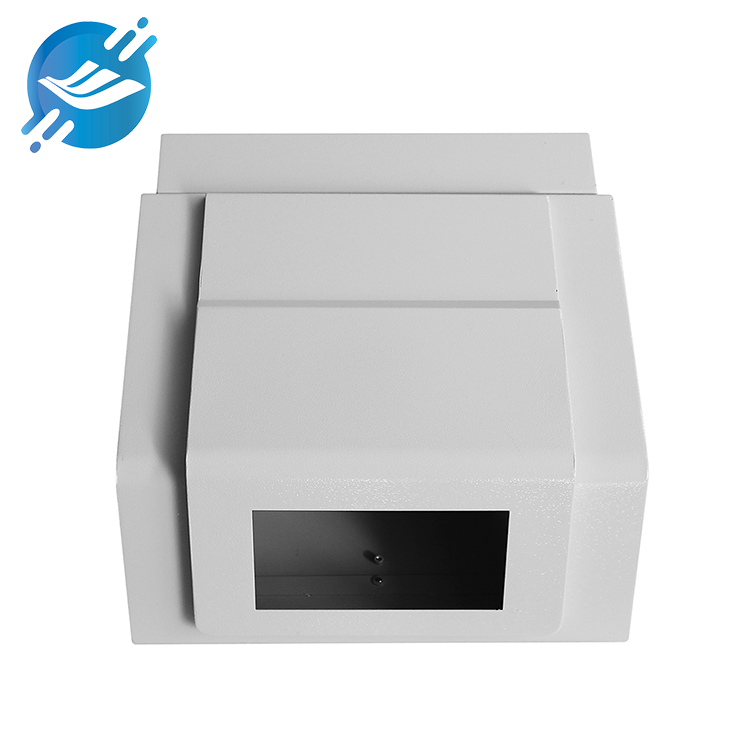
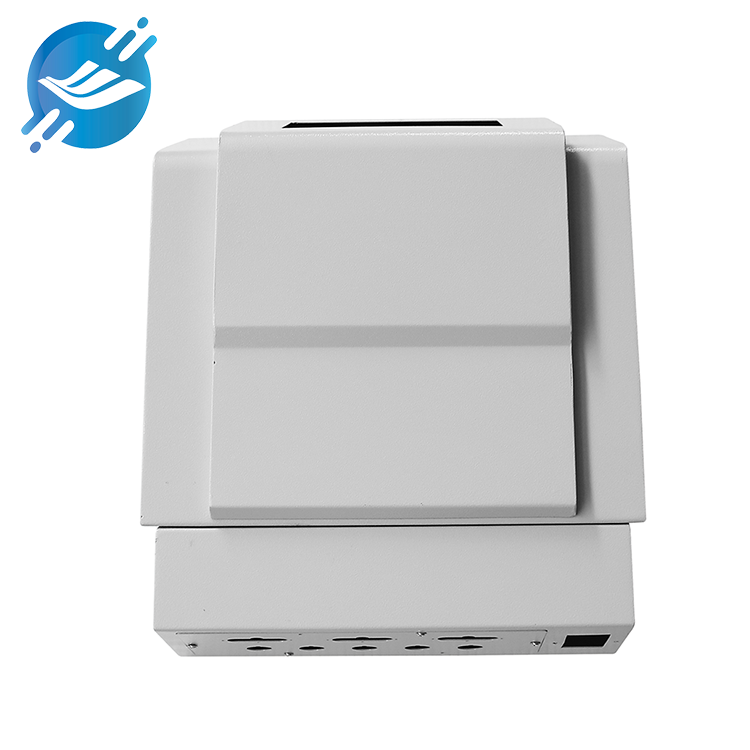
One of the most distinctive characteristics of this enclosure is its formed exterior. Instead of using a simple rectangular box with completely flat surfaces, the panels include angled sections, folded edges, and shaped transitions.
These formed areas can improve the overall rigidity of the housing while also giving the finished product a more refined appearance. For commercial equipment manufacturers, this can be particularly valuable because the enclosure is often visible to customers, operators, or service personnel.
A professional exterior can contribute to the overall perception of the equipment. Smooth panels, consistent bends, carefully positioned openings, and a uniform coating can make the finished machine look more complete and professionally engineered.
TheCustom Ventilated Metal Enclosurecan also be developed in different shapes when the equipment requires a specific external profile. Custom bending allows designers to create clearances around internal components while maintaining a compact external footprint.
Rounded or angled transitions can also be incorporated where appropriate. The exact design depends on the customer’s drawings, samples, equipment dimensions, and manufacturing requirements.
Custom Openings and Mounting Features
An enclosure is only useful when the equipment inside can be installed and connected correctly. For this reason, openings and mounting features are an important part of the design process.
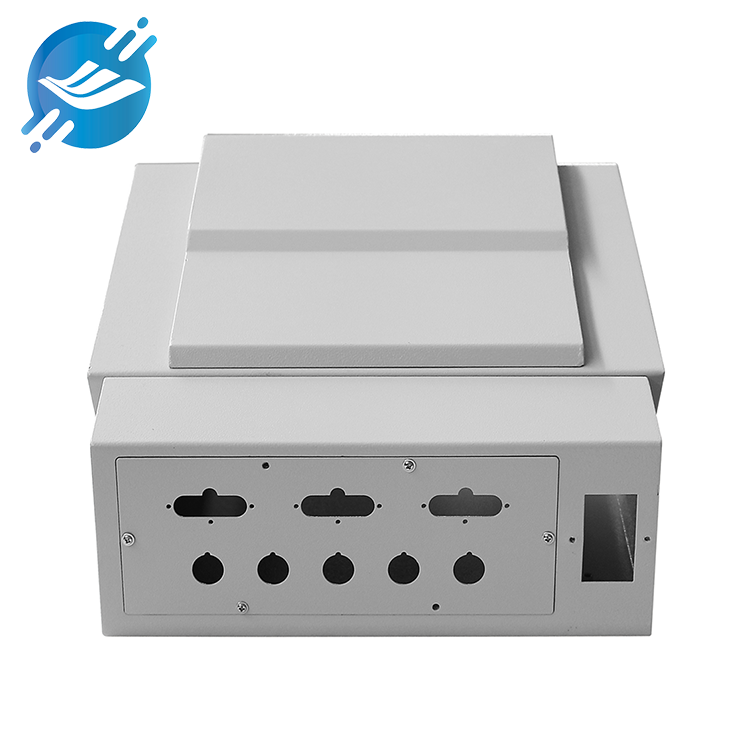
The enclosure shown in the image includes a large side opening. This type of opening can be customized according to the customer’s internal structure and external interface requirements. Additional openings can be created for cables, connectors, displays, switches, indicators, ventilation, or other equipment interfaces.
Mounting holes can also be positioned according to the internal equipment layout. Depending on the design, the housing may incorporate threaded holes, mounting plates, studs, brackets, captive nuts, or other fixing features.
These details allow the enclosure to become an integrated part of the final equipment rather than simply acting as a protective cover.
For OEM projects, customers can provide engineering drawings showing hole locations and dimensions. When drawings are not available, a physical sample or basic dimensional information can be used as a starting point for enclosure development, depending on the complexity of the project.
Surface Finishing and Color Customization
Surface finishing has both functional and visual importance. After sheet metal fabrication, the enclosure can undergo surface preparation followed by powder coating or another suitable finish.
The white finish shown in the product image provides a clean and modern appearance that can work well with electronic, medical, commercial, and industrial equipment. However, theCustom Ventilated Metal Enclosurecan also be produced in other colors according to customer requirements.
Custom color selection can help manufacturers maintain consistent branding across an equipment series. A company may choose a specific color for its machinery, control equipment, kiosks, or other products so that the finished enclosure matches the rest of the product family.
Powder coating can also provide a durable finished surface that is practical for general industrial and commercial environments. The final coating specification can be selected according to the expected application and appearance requirements.
Additional identification features can be considered as well. Depending on the project, logos, labels, markings, or other visual elements can be incorporated into the external panels.
Customization From Dimensions to Structure
One of the primary advantages of custom sheet metal fabrication is design flexibility. The enclosure does not have to follow a fixed standard size.
Overall dimensions can be adjusted to match the equipment that will be installed inside. The preferred size can be specified according to available installation space, internal component arrangement, required airflow, and external interface locations.
The panel configuration can also be modified. Different access panels, removable sections, brackets, reinforcing structures, mounting plates, and fastening methods can be incorporated according to the application.
Ventilation openings can be redesigned as well. A project may require narrow slots, larger openings, repeated ventilation patterns, or a specific arrangement around heat-producing areas.
Other possible customization details include:
- Overall enclosure dimensions
- Sheet metal thickness
- Material selection
- Panel configuration
- Ventilation slot design
- Cable entry openings
- Connector openings
- Mounting holes
- Internal brackets
- Removable panels
- Hinges and fasteners
- Surface finish
- Powder coating color
- Logo and identification markings
This flexibility makes theCustom Ventilated Metal Enclosuresuitable for OEM and ODM projects where standard products cannot fully satisfy the equipment requirements.
Manufacturing Process for a Custom Metal Housing
Producing a high-quality metal enclosure involves more than simply cutting and bending sheet metal. The manufacturing process needs to consider dimensional accuracy, panel alignment, structural strength, appearance, and assembly requirements.
The process generally begins with engineering drawings or customer specifications. The design team reviews the dimensions, material requirements, ventilation pattern, mounting features, access panels, and other details.
After the design is confirmed, sheet metal can be cut according to the required geometry. Laser cutting is particularly useful for creating precise ventilation slots and small mounting holes.
The cut panels then move to the bending process. CNC bending equipment forms the flat sheets into the required angles and profiles. Accurate bending is important because even small dimensional differences can affect the final assembly.
If the design includes welded joints, the relevant components are positioned and welded before the surface finishing stage. Welding can provide strong permanent connections for structural areas, while mechanical fastening may be selected where future disassembly is required.
After fabrication, the enclosure can be cleaned, treated, and powder coated. Quality inspection can then focus on dimensions, panel alignment, openings, coating consistency, and assembly condition.
The finishedCustom Ventilated Metal Enclosurecan then be assembled according to the agreed configuration and prepared for delivery.
Applications Across Different Industries
Custom metal housings are used across many industries because equipment manufacturers often need external structures that are specifically adapted to their products.
In industrial automation, a custom enclosure can be used as the outer housing for control equipment, monitoring systems, automation units, and industrial electronic equipment. Mounting holes and cable openings can be positioned around the equipment layout to simplify installation.
In commercial equipment, custom housings can provide a finished exterior for machines used in retail, service, transportation, and other customer-facing environments. The appearance of the enclosure can be coordinated with the overall product design.
In communication and networking applications, metal housings can be designed around equipment that requires organized cable access and ventilation. The enclosure can incorporate suitable openings while maintaining a structured external appearance.
Medical and laboratory equipment can also require specialized external housings. In these environments, smooth surfaces, controlled openings, easy maintenance access, and consistent finishes can be important design considerations.
Other potential applications include industrial controllers, monitoring equipment, automation equipment, electronic machinery, charging equipment, commercial machines, testing equipment, and various customized systems.
The actual application depends on the customer’s internal equipment and technical specifications. The metal enclosure serves as the outer case and does not itself include the customer’s internal electronic components.
Designing an Enclosure Around the Equipment
A successful enclosure project starts with understanding what needs to be installed inside. Before production, manufacturers should consider the dimensions of internal components, cable routing, mounting points, ventilation requirements, access requirements, and installation environment.
The external dimensions should provide sufficient clearance for installation and maintenance without creating unnecessary unused space. The location of ventilation openings should be coordinated with the internal heat distribution.
Cable openings should also be positioned carefully. Poorly positioned openings can make installation difficult or create unnecessary cable bends. When the equipment has multiple external connections, it is useful to define these interfaces during the enclosure design stage.
Maintenance access should be considered as well. If certain internal components require frequent replacement or inspection, removable panels or service openings can make the finished equipment easier to maintain.
By considering these requirements before fabrication, theCustom Ventilated Metal Enclosurecan be developed as an integrated component of the final product rather than as an afterthought.
Why Choose a Custom Manufacturing Approach?
Standard enclosures can be useful for simple applications, but they may require compromises when the equipment has unusual dimensions or specific external interfaces. A custom manufacturing approach removes many of these limitations.
Instead of selecting an existing box and modifying the equipment around it, manufacturers can develop the housing according to the actual product. This approach can improve space utilization and create a more consistent external appearance.
Custom manufacturing can also support product development. When equipment is redesigned or upgraded, the enclosure can be modified together with the internal system. New mounting holes, ventilation patterns, access panels, and dimensions can be incorporated into the next version.
For companies producing equipment in different sizes or configurations, customized sheet metal fabrication can also provide a scalable approach. Related enclosure designs can share common manufacturing methods while using different dimensions or openings for different product models.
Conclusion
TheCustom Ventilated Metal Enclosureprovides a flexible external housing solution for manufacturers that need more than a standard metal box. Its formed sheet metal construction, integrated ventilation, customized openings, mounting possibilities, and powder-coated finish make it suitable for a wide range of industrial and commercial equipment.
The enclosure can be developed around specific dimensions, internal equipment layouts, airflow requirements, cable connections, and installation conditions. From material and sheet thickness to ventilation slots, mounting holes, access panels, color, and surface finish, each part of the structure can be considered during the customization process.
For equipment manufacturers, OEM customers, and industrial product developers, custom sheet metal fabrication provides the flexibility to create a housing that matches the actual product. The result is a professional outer case that protects internal equipment, supports installation, improves accessibility, and contributes to a consistent finished appearance.
When selecting a supplier for a custom enclosure project, it is important to consider sheet metal fabrication capabilities, bending accuracy, welding quality, surface finishing, customization experience, and the ability to manufacture according to technical drawings. With the right manufacturing process, aCustom Ventilated Metal Enclosurecan become a durable and well-integrated part of the finished equipment system.
Post time: Sep-24-2026


